


Commercial acrylic swimming pools
In the realm of luxury pool design, the choice between acrylic and glass has become a defining factor for homeowners, resort developers, and architects alike. As transparent swimming pool and acrylic infinity pool emerge as top Google search trends in recent months, thick acrylic panels are steadily outperforming traditional glass in both residential and commercial projects . This article delves into the critical differences between the two materials and explains why thick acrylic has become the preferred option for modern pool construction. Commercial acrylic pool is available for sale at UC Acrylic
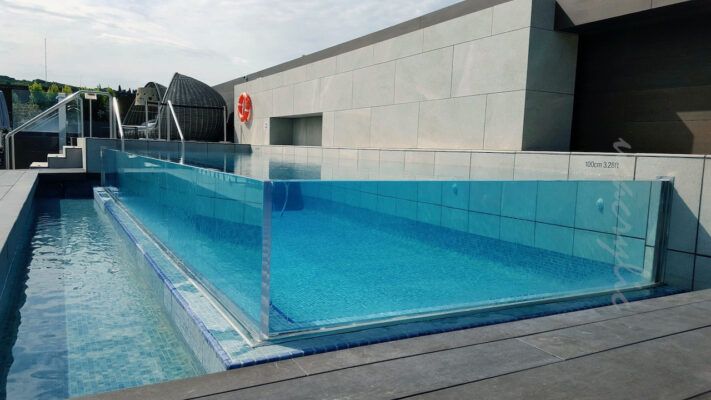
Clear Acrylic Pool Walls
The most compelling advantage of thick acrylic panels lies in their unmatched impact resistant acrylic for pools performance. Acrylic boasts impact strength 100 times greater than ordinary glass and 16 times higher than tempered glass . A 0.25-inch thick acrylic sheet can withstand 18.1 ft-lbs of falling ball impact, while the same thickness of tempered glass only handles 15.5-29.1 ft-lbs and plate glass a mere 1.0 ft-lbs . For pools, which face dynamic pressures from water, waves, and human activity, this durability is non-negotiable. Thick acrylic panels, available in thicknesses ranging from 30mm to 950mm , eliminate the risk of spontaneous explosion that plagues glass, especially under extreme temperature fluctuations or weather conditions .
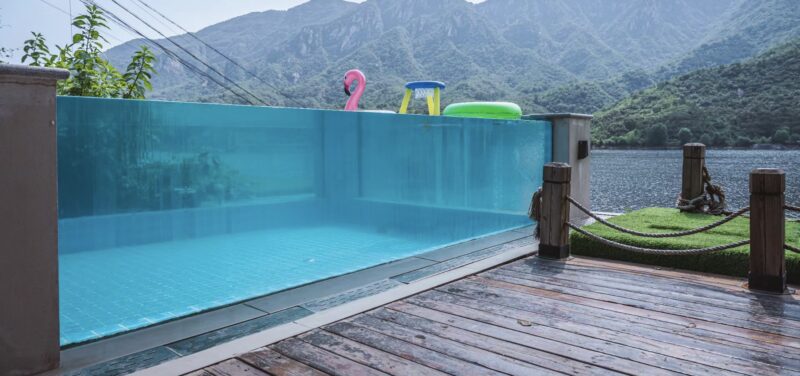
Acrylic pool factory
Transparency and aesthetic versatility further cement acrylic’s superiority. Thick acrylic panels offers a light transmittance of 92%-95% , surpassing the 82%-89% range of glass . This clarity creates the illusion of seamless water integration, a key feature in plexiglass pool walls and infinity pools. Unlike glass, which cannot be reprocessed after tempering and is limited to maximum sizes around 6.8m x 2.5m , acrylic enables on-site seamless splicing using specialized solutions . The 26-meter-long acrylic viewing panel at Sanya’s Atlantis Hotel and the 63-meter-wide suspended pool at Sunshine One Hotel are stunning examples of this flexibility .
Practical benefits like lightweight design and cost-efficiency also tip the scales. Acrylic is half the weight of glass, reducing shipping costs and simplifying installation . Its thermal conductivity (1.3 btu/(hr-ft²)(f/inch)) is far lower than glass (5.3 btu/(hr-ft²)(f/inch)) , improving temperature regulation and cutting heating expenses. While glass may have a lower initial cost, acrylic’s 30-year warranty against yellowing and cracking contrasts sharply with glass’s higher maintenance needs and potential replacement costs. For high-rise or large-scale projects, the long-term savings of acrylic are substantial .
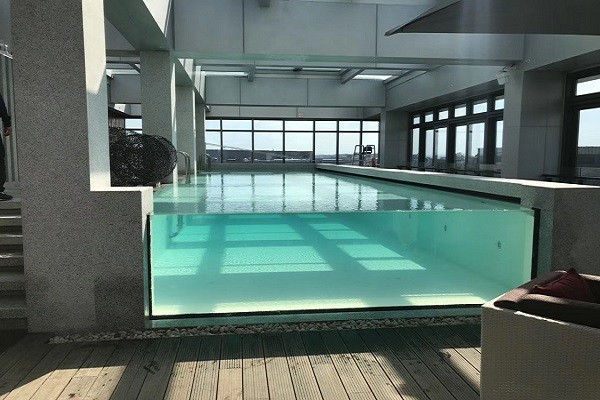
Glass, despite its hardness advantage, falls short in pool-specific applications. Its heavy weight (2.9 lbs/ft² for 0.25-inch thickness vs. acrylic’s 1.5 lbs/ft² ) increases structural load requirements, and its inability to form seamless large panels limits design possibilities . Scratch concerns with acrylic are easily mitigated by modern abrasion-resistant coatings , and in pool environments, scratches from daily use are rare .
In the contest of acrylic vs. glass for pools, thick acrylic panels emerge as the clear winner. Their unbeatable impact resistance, superior transparency, design flexibility, and long-term value address the core needs of modern pool construction. As transparent swimming pool panels and seamless acrylic pool walls remain high on Google’s trending search lists , choosing thick acrylic is not just a design choice—it’s an investment in safety, beauty, and durability that stands the test of time.
Welcome your orders. please contact us if you have interests.